Growth
Where an app’s customers come from, and how to reach each one
People find apps in two ways. Some go looking, in a store, on Google or by asking an AI assistant. Others come across an app they weren’t looking for, in a video, a Reddit thread or a friend’s message. Most apps need some of both, and the two kinds of channel work very differently.
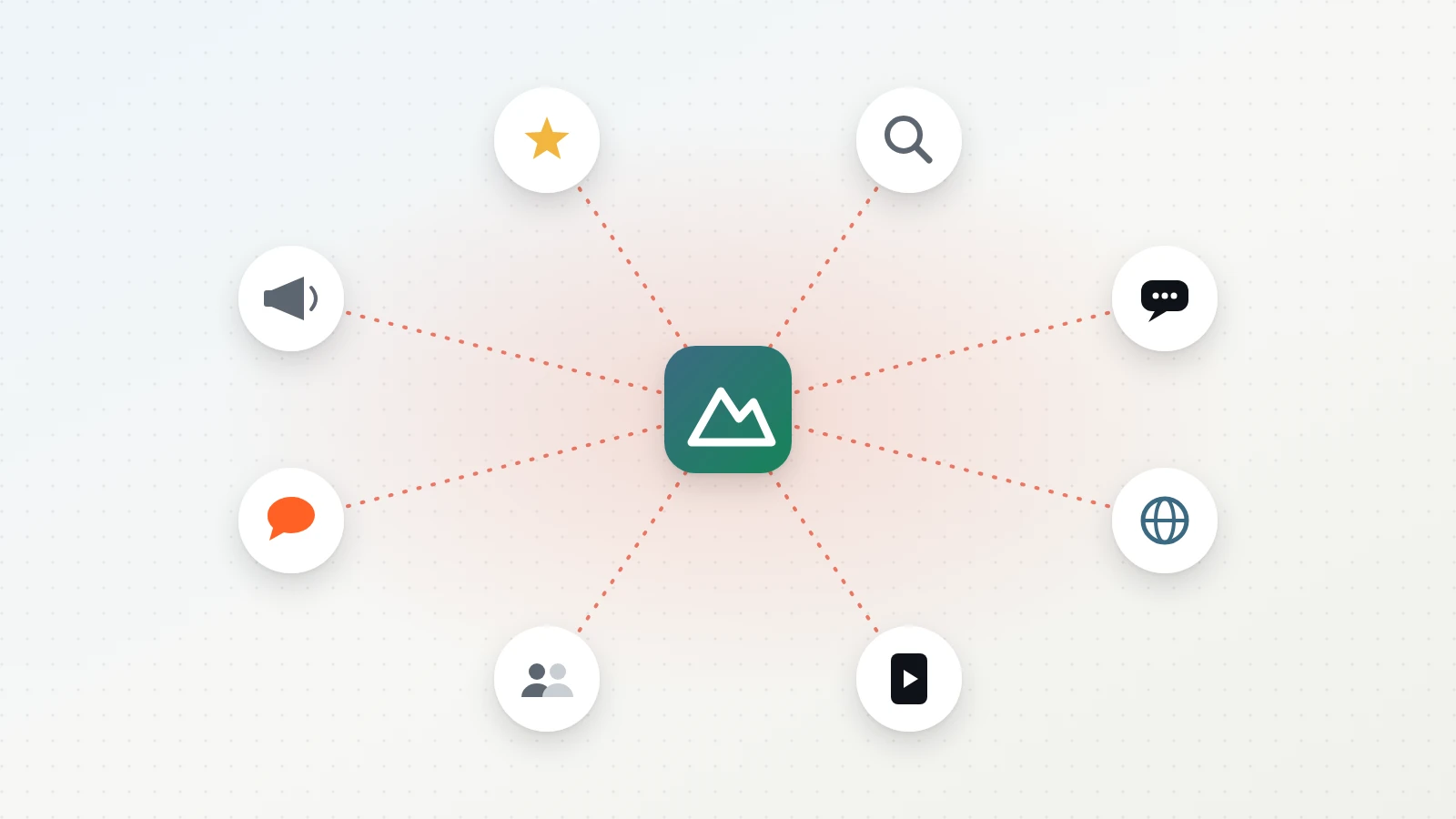
Ternly works on the first kind. For most apps the second kind matters as much, and it feeds the first: reviews, threads and articles about your app become pages that search and AI answers rely on.
People who are already looking
Search channels bring people who already want an app like yours, so the work is making sure yours is the one they find. They look in three places.
App Store and Google Play search
Apple says more than 850 million people visit the App Store every week, that 70% of visitors use search to find apps, and that almost 65% of downloads happen directly after a search. [1] Store search ranks apps on how well the title, subtitle, keywords and category match the search, and on downloads, ratings and reviews. [2] That second part favours apps that are already popular, which is why a new app does best on narrow searches that describe exactly what it does.
Google sends people to your website and to pages about your category, such as review sites, “best apps for…” lists and forum threads. Your own site can rank for your app’s name fairly quickly. Ranking for what people search before they’ve heard of you takes links and time, which is one reason the channels further down this post help with search too.
AI answers
People also ask ChatGPT, Gemini, Claude or Perplexity to recommend an app. In AppTweak’s study of more than 125,000 ChatGPT responses in the US, from May 2026, store listings made up 47.5% of the citations behind app recommendations and the open web 27%. [3] So the answers lean on the same listing and web pages that store search and Google read, which is why we treat the three as one problem (more on that here).
People who come across you
The other channels reach people who weren’t searching. They take more effort per person, but they create demand that search alone can’t, and many of them leave behind pages that later rank on Google and get cited by AI.
User-generated content
User-generated content is anything your users make about your app: a screen recording on TikTok, a screenshot of a result, a review, a post about how they use it. It works because it comes from someone with nothing to sell. You can make it more likely: give people something worth sharing, such as a finished workout, a year in review or a nice-looking export, and put a share button next to it. Then repost what people make, with their permission.
Creators
Paying or gifting creators to show your app is the faster, more controlled version of user-generated content. For a small budget, smaller creators whose audience matches your users tend to be a better fit than big names. Send their viewers to a page that matches the video. On the App Store, a custom product page can show the screenshots and text the creator talked about; Apple says linking to one lifts conversion by 2.5 percentage points on average, from a 1.6% average on default product pages. [4] Paid posts need to be labelled as ads; platforms and advertising rules generally require it.
Reddit, Discord and other communities
Communities are where people ask for recommendations in their own words, and where they’re quick to spot an advert. Take part as yourself, say that you made the app, follow each community’s rules about self-promotion, and answer the question even when the best answer isn’t your app. These threads also last. They rank on Google for years, and AI answers cite them; in AppTweak’s study, Reddit was cited about five times as often for games as for other apps. [3]
Referrals and word of mouth
In Nielsen’s 2021 survey of more than 40,000 people, 88% said they trust recommendations from people they know more than any other channel. [5] You can help word of mouth along inside the app: invite links that take a friend straight to the right place, shared lists or plans that only work if the friend joins, and rewards for both sides when it makes sense.
Paid ads
Ads buy reach immediately, at a price per install. Apple Ads on the App Store reach people who are already searching, and Apple reports a tap-through install rate of over 60% for ads at the top of search results. [1] Ads on Meta, TikTok and Google reach people who aren’t searching, and need a strong video or image to stop them scrolling. Either way, ads pay off best once your listing already converts well, because every visitor who leaves without downloading still costs you.
Launch sites, press and newsletters
Product Hunt, app newsletters, niche blogs and press bring a spike of attention around a launch or a big update. The spike fades, but the links and write-ups stay, and they’re the kind of page Google ranks and AI answers cite when someone asks about your category later.
Where to start
Every channel above ends on the same two pages: your store listing and your website. Getting those clear costs the least and makes every other channel work better, so it’s the place to begin. After that, pick one discovery channel that matches where your users already spend time and do it consistently for a few months before adding another. Add paid ads once you know what converts.
Sources
- Apple Ads, Apple Ads on the App Store. Weekly visitors: App Store, worldwide, 2026. Search figures: App Store, worldwide, 2022. Tap-through install rate: Apple Ads countries and regions, November 2024 to October 2025.
- Apple, Search, App Store, Apple Developer.
- Pierre-Antoine Roy, Which sources do AI search engines cite when recommending apps, AppTweak, 30 September 2026. Data: more than 125,000 ChatGPT responses, US, May 2026.
- Apple, Custom product pages on the App Store, Apple Developer.
- Nielsen, Beyond martech: building trust with consumers and engaging where sentiment is high, 2021. Data: Trust in Advertising Study, more than 40,000 online respondents, September 2021.
Sources checked .